Ask anyone who has switched to a whole food plant-based diet and one of the first things they will tell you — often with genuine surprise and delight — is how dramatically their skin, hair, and nails changed. The breakouts cleared up. The dullness disappeared. The hair became thicker and shinier. The nails stopped breaking. And all of this happened not from any expensive cream, supplement, or beauty treatment — but simply from changing what they ate every single day.
The connection between diet and the health of your skin, hair, and nails is one of the most well-documented and yet most underappreciated areas of nutritional science. Your skin is the largest organ in your body. Your hair and nails are direct reflections of your internal nutritional status. What you eat shows up on your face, in your hair, and at your fingertips — and a well-planned whole food plant-based diet delivers some of the most powerful beauty-supporting nutrients available anywhere in the food world.
In this article we are going to explore exactly how a vegan diet transforms your skin, hair, and nails from the inside out — which specific plant foods deliver the most powerful beauty benefits, what nutritional changes happen in your body when you go plant-based, and how you can optimize your vegan diet for the most radiant, healthy, and glowing version of yourself. Let us get into it.
What Happens to Your Skin When You Go Vegan
The skin is a living, breathing organ that requires a constant supply of specific nutrients to maintain its structure, hydration, elasticity, and ability to repair itself. When you transition to a whole food plant-based diet, several profound changes happen to your skin — often within just a few weeks.
Reduced inflammation is usually the first and most dramatic change people notice. Animal products — particularly dairy and processed meats — are significant drivers of systemic inflammation in the body. Inflammation is one of the primary causes of acne, rosacea, eczema, psoriasis, and premature aging. When you remove dairy and meat from your diet and replace them with anti-inflammatory plant foods, many people experience a dramatic reduction in breakouts, redness, and skin irritation within just 2–4 weeks.
Improved hydration is the second major change. A diet rich in fruits and vegetables delivers extraordinary amounts of water, electrolytes, and skin-hydrating nutrients directly to the cells of your skin. The high water content of plant foods — cucumbers, watermelon, celery, citrus fruits, leafy greens — keeps skin cells plump, hydrated, and glowing in a way that no moisturizer can fully replicate from the outside.
Reduced oxidative stress is the third transformative change. Plant foods are the richest sources of antioxidants on the planet — compounds that neutralize the free radicals responsible for breaking down collagen, causing wrinkles, and accelerating skin aging. A diet centered on colorful fruits and vegetables delivers an extraordinary diversity of antioxidants that protect your skin from environmental damage and slow the visible signs of aging significantly.
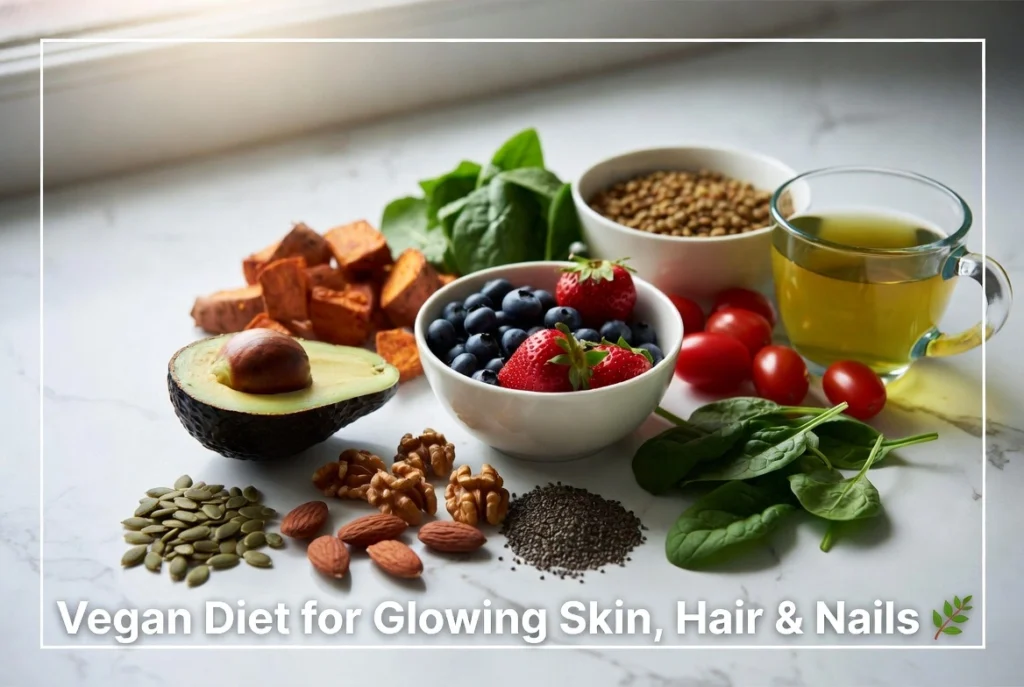
The Best Vegan Foods for Glowing, Healthy Skin
These are the most powerful plant-based foods for transforming the health and appearance of your skin:
Sweet potato and carrots: Both are extraordinarily rich in beta-carotene — the plant precursor to Vitamin A that gives these foods their vibrant orange color. Beta-carotene converts to Vitamin A in the body and is one of the most important nutrients for skin cell turnover, collagen production, and protection against UV damage. People who eat large amounts of beta-carotene-rich foods over time develop a natural warm, golden glow to their skin that no fake tan can replicate.
Avocado: Perhaps the single most skin-supporting food in the entire plant kingdom. Avocados are loaded with heart-healthy monounsaturated fats that keep skin cells supple and hydrated, Vitamin E that protects against oxidative damage, Vitamin C that supports collagen synthesis, and biotin that strengthens the skin barrier. Eating just half an avocado per day can produce noticeable improvements in skin moisture and suppleness within weeks.
Berries: Blueberries, strawberries, raspberries, and blackberries are among the most antioxidant-dense foods available anywhere. Their extraordinary anthocyanin content protects collagen fibers from breakdown, reduces inflammation, and supports healthy circulation that delivers oxygen and nutrients to skin cells. Regular berry consumption is one of the most evidence-backed dietary approaches to slowing skin aging.
Tomatoes: Cooked tomatoes are one of the richest sources of lycopene — a powerful antioxidant that has been specifically shown to protect skin from UV damage, reduce redness, and improve skin texture. Cooking tomatoes with olive oil dramatically increases the bioavailability of lycopene, making a simple tomato sauce one of the most skin-protective foods you can eat.
Walnuts: The only nut that is a significant source of omega-3 fatty acids, walnuts are extraordinary for skin health. Omega-3 fats reduce inflammation, maintain the skin’s lipid barrier, prevent moisture loss, and reduce the redness and irritation associated with conditions like eczema and psoriasis. Just a small handful of walnuts per day delivers measurable benefits to skin health.
Green tea: Rich in EGCG and catechins, green tea is one of the most potent anti-aging beverages available. Its antioxidants protect against UV-induced skin damage, reduce inflammation, improve skin elasticity, and have been shown in clinical studies to reduce the appearance of fine lines and wrinkles with regular consumption.
Dark leafy greens: Spinach, kale, Swiss chard, and collard greens are loaded with Vitamins A, C, E, and K, along with folate, iron, and powerful antioxidants that support skin cell renewal, collagen synthesis, and protection against oxidative damage. Eating a large salad of dark leafy greens every day is one of the simplest and most powerful things you can do for your skin.
Flaxseeds and chia seeds: Both are outstanding sources of ALA omega-3 fatty acids and lignans that reduce inflammation, improve skin hydration, and support the skin’s lipid barrier. Ground flaxseeds added to smoothies, oatmeal, or baked goods every day deliver a consistent supply of skin-supporting fatty acids that keep skin soft, supple, and well-moisturized from the inside out.
What Happens to Your Hair When You Go Vegan
Hair is made primarily of keratin — a protein that requires a consistent supply of specific amino acids, vitamins, and minerals to grow strong, thick, and healthy. When you transition to a well-planned plant-based diet, the impact on hair health can be profound — but it requires attention to a few specific nutrients to ensure optimal results.
The most important nutrients for hair health on a vegan diet are protein, iron, zinc, biotin, omega-3 fatty acids, and Vitamin B12. A well-planned plant-based diet delivers all of these nutrients in abundance — with the important exception of Vitamin B12, which must be supplemented consistently.
Many people who go vegan notice improved hair thickness, shine, and growth rate within a few months — particularly if their previous diet was high in processed foods, saturated fats, and low in the micronutrients that hair needs to thrive. The increased intake of iron from legumes and leafy greens, zinc from pumpkin seeds and hemp seeds, and biotin from nuts and sweet potatoes that comes with a well-planned vegan diet directly supports the hair follicle function that drives healthy hair growth.
However it is also true that some people experience temporary hair shedding in the first few months of transitioning to a vegan diet — particularly if the transition is abrupt and results in a significant reduction in protein or iron intake. This is why eating a diverse, nutrient-dense plant-based diet and supplementing with B12 from day one is so important.
The Best Vegan Foods for Thick, Shiny, Strong Hair
These are the most powerful plant-based foods for transforming the health and appearance of your hair:
Lentils: One of the absolute best foods for hair health in the entire plant kingdom. Lentils are packed with protein, iron, folate, zinc, and biotin — five of the most critical nutrients for healthy hair growth. Iron deficiency is one of the most common causes of hair loss and thinning in women, and lentils are one of the richest plant sources of iron available. Eating lentils several times per week provides a consistent supply of the iron and protein that hair follicles need to produce strong, thick hair.
Pumpkin seeds: Exceptionally rich in zinc — one of the most important minerals for hair health. Zinc plays a critical role in hair follicle function, protein synthesis, and the oil gland regulation around hair follicles. A zinc deficiency is directly associated with hair loss and poor hair growth. Just a small handful of pumpkin seeds per day provides a significant portion of the daily zinc requirement.
Hemp seeds: Provide a well-balanced, complete protein profile containing all nine essential amino acids, along with a perfect ratio of omega-3 to omega-6 fatty acids that supports scalp health and hair follicle function. Hemp seeds are also a good source of Vitamin E that protects hair follicles from oxidative damage.
Sweet potato: Extraordinarily rich in beta-carotene that converts to Vitamin A in the body. Vitamin A is essential for the production of sebum — the natural oil that moisturizes the scalp and keeps hair shafts hydrated, supple, and protected from breakage. A scalp that is well-nourished with Vitamin A produces healthier, shinier, more resilient hair.
Nuts and nut butters: Almonds, Brazil nuts, and cashews are all excellent sources of biotin, Vitamin E, zinc, and selenium — nutrients that collectively support hair follicle health, protect against hair breakage, and promote strong, resilient hair growth. Brazil nuts are the richest food source of selenium on the planet — just two Brazil nuts per day provides the entire daily recommended selenium intake.
Tofu and tempeh: Outstanding sources of complete plant-based protein that provides the amino acid building blocks that hair is literally made from. Adequate protein intake is the single most important dietary factor for maintaining healthy hair growth and preventing hair thinning and loss.
What Happens to Your Nails When You Go Vegan
Your nails are made of the same protein as your hair — keratin — and they reflect your nutritional status just as accurately. Brittle, peeling, ridged, or slow-growing nails are often a sign of nutritional deficiencies — particularly in biotin, iron, zinc, calcium, and protein — all of which a well-planned vegan diet delivers in abundance from whole plant foods.
Many people transitioning to a whole food plant-based diet report significant improvements in nail strength, growth rate, and appearance within just a few months. The dramatic increase in biotin from nuts and seeds, iron from legumes and leafy greens, calcium from fortified plant milks and tofu, and protein from beans and whole grains that comes with a well-planned vegan diet directly supports the keratin production that drives strong, healthy nail growth.
The Best Vegan Foods for Strong, Healthy Nails
These are the most powerful plant-based foods for transforming the strength and appearance of your nails:
Almonds: One of the richest plant sources of biotin — the B vitamin most closely associated with nail health. Biotin has been shown in clinical studies to increase nail thickness and reduce nail splitting and brittleness. Just a small handful of almonds per day provides a meaningful contribution to your daily biotin needs.
Sunflower seeds: An outstanding source of Vitamin E, biotin, zinc, and selenium that collectively support strong keratin production and healthy nail growth.
Chickpeas: Rich in protein, biotin, folate, and zinc that support nail keratin synthesis and healthy nail bed function. Regular chickpea consumption is one of the simplest and most effective dietary approaches to improving nail strength and growth.
Fortified plant milks: Calcium is essential for nail hardness and strength. Fortified oat, almond, and soy milks provide calcium in the same amounts as dairy milk — making it easy to meet your calcium needs on a vegan diet and support strong, resilient nails.
Tofu: An outstanding source of both calcium and protein — the two nutrients most directly responsible for nail hardness and growth. Firm tofu set with calcium sulfate is particularly rich in calcium, providing as much as 350mg per 100g serving.
Brazil nuts: The richest food source of selenium available anywhere — and selenium is one of the most important minerals for nail health. Selenium deficiency is directly associated with brittle, weak, slow-growing nails. Just two Brazil nuts per day provides the entire daily recommended selenium intake.
The Three Most Important Nutrients to Watch on a Vegan Diet for Beauty
While a well-planned whole food plant-based diet delivers extraordinary beauty benefits, there are three specific nutrients that require particular attention to ensure optimal skin, hair, and nail health:
Vitamin B12: The one nutrient that is not reliably available in plant foods and must be supplemented. B12 deficiency causes dull, pale skin, hair loss, brittle nails, and fatigue. Supplement with at least 25–100mcg of cyanocobalamin daily and get your B12 levels checked annually.
Iron: Essential for oxygen delivery to skin cells and hair follicles. Always pair iron-rich plant foods with Vitamin C-rich foods to maximize absorption. Get your iron levels checked if you notice hair thinning, pale skin, or extreme fatigue.
Omega-3 fatty acids: Essential for skin hydration, scalp health, and the reduction of inflammatory skin conditions. Include ground flaxseeds, chia seeds, and walnuts in your daily diet and consider an algae-based EPA and DHA supplement for the most complete omega-3 coverage.
A Sample Day of Beauty-Supporting Plant-Based Eating
Here is an example of what a full day of skin, hair, and nail-supporting plant-based eating looks like on The Green Kitchen:
Breakfast: Oat porridge with ground flaxseeds, a handful of blueberries, sliced almonds, and a drizzle of maple syrup. A cup of green tea on the side.
Lunch: A big lentil and spinach salad with roasted sweet potato, pumpkin seeds, cherry tomatoes, and a lemon tahini dressing. A handful of walnuts on the side.
Dinner: Chickpea curry over basmati rice with a side of roasted carrots and a squeeze of lemon. Half an avocado sliced on the side.
Snacks: Fresh berries, a small handful of Brazil nuts and almonds, or a smoothie blended with spinach, mango, chia seeds, and fortified oat milk.
This single day delivers extraordinary amounts of beta-carotene, Vitamin C, Vitamin E, iron, zinc, biotin, omega-3 fatty acids, protein, and antioxidants — everything your skin, hair, and nails need to look and feel their absolute best.
How Long Does It Take to See Results?
One of the most common questions people ask when they transition to a plant-based diet is how quickly they will see improvements in their skin, hair, and nails. The honest answer is that it varies from person to person depending on their previous diet, their current nutritional status, and how nutrient-dense their new plant-based diet is. However as a general guide:
Skin improvements are usually the first and fastest to appear. Many people notice reduced breakouts, less redness, and improved skin clarity within 2–4 weeks of eliminating dairy and processed foods and increasing their intake of antioxidant-rich plant foods.
Hair improvements typically take longer to become visible — usually 2–3 months — because hair grows slowly and the improvements happen at the root level before becoming visible at the surface.
Nail improvements are usually visible within 4–8 weeks of consistent nutrient-dense plant-based eating, particularly in terms of reduced brittleness, faster growth, and improved strength.
Final Thoughts
The most effective, most affordable, and most sustainable beauty treatment available to anyone anywhere in the world is not found in a cream, a serum, or a supplement — it is found on your plate. A whole food plant-based diet delivers the richest possible supply of the nutrients your skin, hair, and nails need to look and feel their absolute best — from the inside out, every single day.
At The Green Kitchen we believe that eating beautifully and eating healthily are the same thing — and that every recipe on our blog is not just a meal but an investment in your long-term health, vitality, and radiance. Browse our full collection of plant-based recipes and discover just how extraordinary — and delicious — eating for beauty can truly be. 🌿
Have you noticed changes in your skin, hair, or nails since going plant-based? Leave a comment below and share your experience — we love hearing from The Green Kitchen community!
The right food elements are the foundation of healthy skin, hair, and nails — read our guide on Importance of Food Elements for a complete nutritional breakdown.

Sonia is a passionate plant-based cook and the lead recipe creator at The Green Kitchen. With years of experience crafting vibrant, wholesome vegan meals, she believes that healthy eating should be exciting, flavorful, and accessible to everyone. Her recipes are tested, practical, and designed to bring joy to your kitchen every single day.