The quality of what you cook with is every bit as important as how you cook it. You can have the most beautiful recipe in the world — the perfect spice blend, the most elegant technique, the most inspired flavor combinations — but if your ingredients are low quality, stale, or poorly chosen, the finished dish will never reach its full potential. In plant-based cooking especially, where vegetables, legumes, grains, nuts, seeds, and fruits are the stars of every single meal, the quality of your ingredients is everything.
The good news is that choosing the highest quality plant-based ingredients does not require a huge budget, a specialty grocery store, or a degree in nutrition. It requires knowledge — knowing what to look for, what to avoid, how to read labels, how to choose fresh produce, and how to source the best possible versions of the staple ingredients that form the foundation of every great plant-based meal.
In this complete guide we are going to walk through every major category of plant-based ingredient — fresh produce, legumes, grains, nuts and seeds, plant-based milks, oils, herbs and spices, and packaged vegan products — and give you the exact knowledge you need to choose the highest quality version of each one every single time. By the time you finish reading this guide, every trip to the grocery store will be a more informed, more intentional, and more rewarding experience.
Why Ingredient Quality Matters So Much in Plant-Based Cooking
In traditional meat-based cooking, heavy sauces, marinades, and long cooking times can mask the quality of the primary ingredient to some degree. In plant-based cooking there is nowhere to hide. A watery, flavorless tomato produces a watery, flavorless sauce. A stale spice blend produces a flat, lifeless curry. An underripe avocado produces a bitter, stringy guacamole. The quality of each individual ingredient shines through directly in the finished dish.
Beyond flavor, ingredient quality has profound implications for nutritional value. Fresh, seasonal, minimally processed plant foods deliver significantly more vitamins, minerals, antioxidants, and phytonutrients than their stale, out-of-season, or heavily processed counterparts. The nutritional gap between a freshly harvested organic spinach and a bag of pre-washed spinach that has been sitting in a refrigerated warehouse for two weeks is significant and measurable.
Choosing the highest quality plant-based ingredients is therefore not just about making your food taste better — it is about getting the maximum possible nutritional value from every meal you cook and every ingredient you buy.
1. How to Choose the Highest Quality Fresh Produce
Fresh fruits and vegetables are the heart and soul of plant-based cooking. Here is how to choose the very best at every shopping trip.
Shop seasonally. This is the single most important principle of high quality produce selection. Fruits and vegetables that are in season locally are picked at peak ripeness, transported shorter distances, and arrive at the store with significantly more flavor, nutritional value, and freshness than out-of-season produce that has been shipped from the other side of the world and ripened artificially in transit. A tomato in summer and a tomato in winter are almost entirely different foods in terms of flavor and nutrition.
Buy from farmers markets when possible. Produce sold at farmers markets is typically harvested within 24–48 hours of sale — compared to supermarket produce that may have spent days or weeks in cold storage and transit. The difference in flavor and nutritional value between farm-fresh and supermarket produce can be extraordinary.
Use your senses. The best produce selection tool you have is not a label — it is your own senses. Smell stone fruits and melons at the stem end — ripe, high quality fruit smells intensely fragrant. Press avocados and mangoes gently — they should yield slightly to pressure when ripe. Look for vibrant, saturated color in all produce — pale, washed-out color indicates either under-ripeness or loss of nutritional value. Feel the weight of fruits and vegetables — heavier items are juicier and fresher.
Choose odd shapes over perfect ones. Perfectly uniform, unblemished produce has often been grown with higher inputs of pesticides and fertilizers to achieve that cosmetic perfection. Slightly irregular, odd-shaped produce is often more naturally grown, more flavorful, and just as nutritious.
Specific tips for key produce items:
Tomatoes: Choose tomatoes that smell intensely tomato-like at the stem end. They should feel heavy for their size and have deeply saturated color. Avoid refrigerated tomatoes — cold destroys the enzymes responsible for tomato flavor permanently.
Leafy greens: Look for deeply colored, crisp leaves with no yellowing, wilting, or sliminess. The darker the green the higher the chlorophyll and nutrient content. Avoid pre-washed bags that have been sitting for more than a few days.
Avocados: For immediate use choose avocados that yield to gentle pressure. For use in 2–3 days choose firm avocados and ripen at room temperature. Never choose avocados with soft spots, dark patches through the skin, or a rattling seed — all signs of over-ripeness or damage.
Root vegetables: Choose firm, heavy carrots, beets, and sweet potatoes with no soft spots, cracks, or sprouting. The skin should be smooth and the flesh should feel dense and solid.
Citrus fruits: Always choose by weight rather than size. The heaviest citrus fruits contain the most juice. The skin should be thin and tight rather than thick and puffy.
Berries: Look for plump, deeply colored berries with no mold, leaking, or crushing. Avoid containers with stained bottoms — a sign that the bottom layer has been crushed and is beginning to deteriorate.
2. How to Choose the Highest Quality Legumes
Legumes — beans, lentils, chickpeas, and peas — are the protein and fiber backbone of plant-based cooking. Here is how to choose the best.
Dried vs canned: Both have their place in a high quality plant-based kitchen. Dried legumes are significantly more economical, have a better texture when cooked properly, and allow you to control the salt content completely. Canned legumes are enormously convenient and perfectly adequate for most recipes — just choose brands with no added salt or minimal added salt, and always drain and rinse thoroughly before use to remove the excess sodium and the compounds that cause digestive discomfort.
Choosing dried legumes: Look for legumes with uniform, vibrant color and no cracks, wrinkles, or shriveling. Old dried legumes take much longer to cook and may never fully soften regardless of cooking time. Buy from stores with high turnover to ensure freshness. Store in airtight containers away from light and heat and use within 12 months of purchase.
Choosing canned legumes: Read the ingredient list. The only ingredients should be the legume, water, and possibly salt. Avoid cans with added sugar, artificial preservatives, or flavor additives. Choose BPA-free cans where available. Tetrapak cartons are an excellent alternative to cans for legumes and are widely available.
Best brands and sourcing: Organic legumes are worth the small additional cost — they are grown without synthetic pesticides and fertilizers and are often higher in beneficial compounds. Local and heritage varieties of beans and lentils available at farmers markets and specialty stores often have superior flavor and nutritional profiles compared to mass-produced commercial varieties.
3. How to Choose the Highest Quality Grains
Whole grains are the energy foundation of a plant-based diet and choosing the highest quality versions makes a significant difference to both flavor and nutrition.
Always choose whole grains over refined grains where possible. Whole grains retain the bran and germ layers that contain the vast majority of the grain’s fiber, vitamins, minerals, and antioxidants. White rice, white flour, and white pasta have had these layers removed and deliver a fraction of the nutritional value of their whole grain counterparts.
Freshness matters enormously with whole grains. The oils in the germ layer of whole grains can go rancid over time, producing a bitter, stale flavor that ruins any dish. Buy whole grains from stores with high turnover, store in airtight containers in a cool dark place, and use within 6 months of purchase. Whole grain flours are particularly susceptible to rancidity and are best stored in the refrigerator or freezer.
Specific tips for key grains:
Oats: Choose rolled oats or steel-cut oats over instant oats for significantly better texture, flavor, and nutritional value. Certified gluten-free oats are essential for anyone with celiac disease or gluten sensitivity. Organic oats are worth the investment as oats are one of the most heavily pesticide-sprayed crops commercially.
Quinoa: Always rinse quinoa thoroughly before cooking regardless of whether the package says pre-rinsed. The natural coating called saponin has a bitter, soapy taste that can ruin a dish if not removed. Choose organic quinoa where possible.
Rice: Brown rice, black rice, red rice, and wild rice all deliver significantly more nutrition than white rice. Buy from stores with high turnover and store in airtight containers. Basmati and jasmine rice are best purchased from Asian grocery stores where the turnover is high and the quality is consistently superior to supermarket versions.
Bread and pasta: Always choose whole grain versions. Read the ingredient list carefully — many breads labeled as whole grain actually contain mostly refined flour with only a small amount of whole grain added for marketing purposes. The first ingredient should always be a whole grain flour.
4. How to Choose the Highest Quality Nuts and Seeds
Nuts and seeds are among the most nutritionally dense foods in the plant kingdom — but their high oil content makes them particularly susceptible to rancidity, which not only destroys their flavor but also their nutritional value.
The freshness test: Smell nuts and seeds before purchasing if buying from bulk bins. Fresh nuts smell rich, nutty, and pleasant. Rancid nuts smell sharp, bitter, chemical, or like old paint. This is caused by oxidation of the polyunsaturated fats and produces compounds that are actually harmful to health. Never eat rancid nuts.
Buy raw over roasted where possible. Raw nuts and seeds retain more of their natural oils, vitamins, and antioxidants than roasted versions. If you prefer roasted nuts, dry-roasting them yourself at home at a low temperature gives you far better control over quality and freshness than buying pre-roasted commercial versions which may have been roasted months ago.
Buy unsalted. Pre-salted nuts often use excessive sodium and sometimes sugar or flavor additives. Buying unsalted nuts allows you to control the salt content of your dishes precisely.
Store properly. Nuts and seeds should be stored in airtight containers in the refrigerator or freezer — particularly walnuts, flaxseeds, hemp seeds, and other high polyunsaturated fat varieties that go rancid quickly at room temperature. Ground flaxseeds go rancid extremely quickly and should always be ground fresh or stored in the freezer.
Organic nuts and seeds are worth the investment for the varieties you consume most frequently — particularly almonds, walnuts, and peanuts which are among the most heavily pesticide-treated crops commercially.
5. How to Choose the Highest Quality Plant-Based Milks
Plant-based milks have exploded in variety and availability in recent years and choosing the highest quality option makes a significant difference to both the flavor of your recipes and your nutritional intake.
Read the ingredient list carefully. The highest quality plant milks contain minimal ingredients — ideally just the plant ingredient, water, and perhaps a small amount of salt. Avoid plant milks with carrageenan, artificial flavors, excessive sugar, or long lists of additives and stabilizers.
Choose fortified versions. Most plant milks are now fortified with calcium, Vitamin D, Vitamin B12, and other nutrients to bring their nutritional profile closer to dairy milk. Always choose fortified versions — particularly for calcium and B12 which are critical nutrients on a plant-based diet.
Specific recommendations by type:
Oat milk: The most popular and most versatile plant milk. Choose barista versions for coffee and cooking as they have a higher fat content and foam beautifully. Look for oat milks made with whole oats rather than oat flour for a cleaner ingredient list.
Soy milk: The most nutritionally comparable to dairy milk in terms of protein content. Choose organic soy milk where possible as soybeans are one of the most genetically modified and heavily pesticide-treated crops commercially.
Almond milk: Choose versions with the highest almond content — ideally 5% or more. Many commercial almond milks contain as little as 2% almonds. Unsweetened versions are far preferable to sweetened for cooking and everyday use.
Coconut milk: For cooking always use full-fat canned coconut milk rather than carton coconut drinking milk. The higher fat content is essential for achieving rich, creamy curry and dessert textures.
6. How to Choose the Highest Quality Oils
The quality of the oils you cook with has a significant impact on both the flavor of your food and your health. Here is how to choose the best.
Extra virgin olive oil: Always choose extra virgin over regular or light olive oil. Extra virgin means the oil was cold-pressed without heat or chemicals and retains all of its natural antioxidants, polyphenols, and flavor compounds. Look for oils in dark glass bottles with a harvest date on the label — fresher is always better. The best olive oils have a fruity, slightly peppery flavor that you can taste directly from the bottle.
Coconut oil: Choose virgin or extra virgin coconut oil that smells and tastes clearly of coconut. Refined coconut oil has been processed to remove the coconut flavor and along with it many of the beneficial compounds. Use coconut oil for high-heat cooking and baking.
Avoid highly processed seed oils. Sunflower, canola, and vegetable oils sold in clear plastic bottles have typically been extracted using high heat and chemical solvents that destroy their nutritional value and create harmful oxidation products. If you use these oils choose cold-pressed versions in dark glass bottles.
7. How to Choose the Highest Quality Herbs and Spices
Herbs and spices are the flavor soul of plant-based cooking — and their quality varies enormously between brands and sources.
Freshness is everything with spices. Dried spices lose their potency rapidly after grinding. Old, stale spices produce flat, lifeless dishes no matter how much you use. Test your spices by smelling them — a high quality fresh spice should smell intensely aromatic and vibrant. If a spice smells faint, dusty, or like nothing at all it needs replacing immediately.
Buy whole spices and grind fresh where possible. Whole cumin seeds, coriander seeds, cardamom pods, and peppercorns retain their essential oils and aromatic compounds far longer than pre-ground versions. Grinding them fresh in a spice grinder or mortar and pestle immediately before cooking produces a dramatically more vibrant and flavorful result.
Buy from ethnic grocery stores. South Asian, Middle Eastern, and African grocery stores typically stock a far wider range of fresher, higher quality, and significantly more affordable spices than mainstream supermarkets. The turnover is higher which means the spices are fresher, and the prices are often a fraction of supermarket equivalents.
Fresh herbs are almost always superior to dried. Fresh basil, cilantro, parsley, mint, and dill add a brightness and vibrancy to plant-based dishes that dried herbs simply cannot replicate. Grow a small pot of fresh herbs on your kitchen windowsill for an endless supply of the most-used herbs at minimal cost.
8. How to Choose the Highest Quality Packaged Vegan Products
The market for packaged vegan products — plant-based meats, vegan cheeses, dairy-free yogurts, and convenience foods — has exploded in recent years. Here is how to navigate it with confidence.
Read the ingredient list before anything else. A high quality packaged vegan product should have a short, recognizable ingredient list. If you cannot pronounce or recognize the majority of ingredients on the list it is a sign of heavy processing that typically comes with reduced nutritional value and questionable long-term health implications.
Prioritize whole food ingredients. The best packaged vegan products are made primarily from whole food ingredients — legumes, whole grains, nuts, seeds, and vegetables — rather than isolated proteins, refined starches, and synthetic additives.
Check the sodium content. Many packaged vegan products — particularly plant-based meats and vegan cheeses — are extremely high in sodium. Compare brands and choose the lowest sodium option available.
Do not be misled by health claims on packaging. Terms like natural, clean, and plant-based on the front of a package mean nothing without reading the ingredient list. Some of the most heavily processed vegan products are marketed with the most enthusiastic health claims. Always read the full ingredient list and nutrition panel before purchasing.
Building Your High Quality Plant-Based Pantry
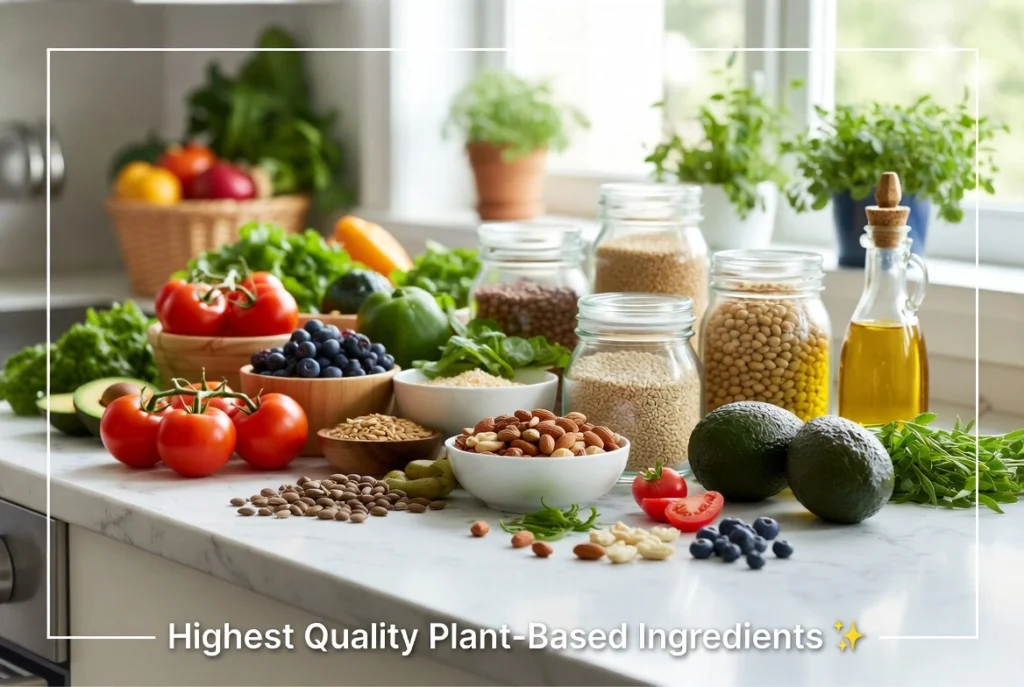
Here is a quick reference guide to building a pantry stocked with the highest quality plant-based staples:
Grains: Brown rice, black rice, quinoa, rolled oats, whole wheat pasta, whole grain bread, buckwheat, millet, and farro.
Legumes: Dried or canned lentils, chickpeas, black beans, kidney beans, cannellini beans, and split peas.
Nuts and seeds: Raw almonds, walnuts, cashews, pumpkin seeds, sunflower seeds, chia seeds, ground flaxseeds, and hemp seeds.
Oils: Extra virgin olive oil, virgin coconut oil, and cold-pressed sesame oil.
Spices: Cumin, coriander, turmeric, smoked paprika, garam masala, cinnamon, cardamom, chili powder, and black pepper — bought whole and ground fresh where possible.
Condiments: Soy sauce or tamari, tahini, apple cider vinegar, nutritional yeast, miso paste, and maple syrup.
Plant milks: Fortified oat milk, fortified soy milk, and full-fat canned coconut milk.
Canned goods: Chopped tomatoes, coconut milk, artichoke hearts, hearts of palm, and young green jackfruit.
Final Thoughts
Choosing the highest quality plant-based ingredients is one of the most powerful investments you can make in both the flavor of your cooking and the quality of your health. It does not require an unlimited budget or access to specialty stores — it requires knowledge, intentionality, and a commitment to reading labels, shopping seasonally, and prioritizing freshness over convenience wherever possible.
At The Green Kitchen every recipe we create is built around the highest quality plant-based ingredients available — because we believe that extraordinary food begins with extraordinary ingredients. Browse our full collection of plant-based recipes and discover what is possible when quality ingredients meet creative, passionate plant-based cooking. 🌿
Have a tip for choosing high quality plant-based ingredients that we have not covered? Leave a comment below — we love hearing from The Green Kitchen community!
Understanding food elements helps you choose better ingredients — read our guide on Importance of Food Elements for a complete nutritional overview.

Sonia is a passionate plant-based cook and the lead recipe creator at The Green Kitchen. With years of experience crafting vibrant, wholesome vegan meals, she believes that healthy eating should be exciting, flavorful, and accessible to everyone. Her recipes are tested, practical, and designed to bring joy to your kitchen every single day.