Imagine opening your fridge on a busy Monday evening after a long day at work and finding everything you need for a delicious, nourishing, home-cooked plant-based dinner already prepped and ready to assemble in under 10 minutes. No chopping, no long cooking times, no staring into the fridge wondering what to make. Just beautiful, ready-to-go ingredients that come together into something extraordinary with minimal effort.
That is the power of plant-based meal prep — and once you experience it, you will never go back to cooking from scratch every single day.
Meal prepping on a plant-based diet is not just about saving time — although it saves enormous amounts of it. It is about eating more consistently well, reducing food waste, saving significant money on your grocery bill, eliminating the daily decision fatigue around what to cook, and making the whole food plant-based lifestyle so easy and enjoyable that it becomes something you genuinely look forward to every single week.
In this complete guide we are going to walk through everything you need to know to meal prep like a true professional on a plant-based diet — from setting up your kitchen and planning your prep sessions, to the best foods to prep in advance, step-by-step weekly prep routines, storage guidelines, and the most delicious ways to use your prepped ingredients throughout the week. Let us get into it.
Why Meal Prep is a Game Changer for Plant-Based Eating
One of the most common reasons people struggle to maintain a consistent plant-based diet is not lack of motivation or knowledge — it is time. Cooking from scratch every day is genuinely time-consuming, and on evenings when you are tired, stressed, or short on time, the temptation to reach for something quick and convenient — which may not align with your plant-based values — is very real.
Meal prep solves this problem completely. By dedicating 2–3 hours on a Sunday or any convenient day to batch cooking and ingredient preparation, you create a week’s worth of plant-based building blocks that make healthy, delicious cooking fast, easy, and almost effortless every single day.
The additional benefits of consistent meal prep on a plant-based diet include:
Significant cost savings. Buying ingredients in bulk for batch cooking is dramatically more economical than buying small quantities for individual daily meals. Meal prepping also reduces food waste enormously — one of the biggest hidden costs in most people’s grocery budgets.
Better nutritional consistency. When healthy, nutrient-dense plant-based ingredients are prepped and ready in your fridge, you are far more likely to eat them consistently than if they require significant preparation every time. Out of sight truly is out of mind when it comes to healthy eating.
Reduced stress around mealtimes. Decision fatigue — the mental exhaustion that comes from making too many decisions throughout the day — is real and significantly impacts the quality of food choices made in the evening. Having a plan and prepped ingredients eliminates this entirely.
More culinary creativity. Counterintuitively, having prepped ingredients readily available often leads to more creative cooking than starting from scratch. When you can see clearly what you have available and it is already prepared, spontaneous, creative combinations become easy and enjoyable.
Setting Up Your Meal Prep Kitchen
Before you dive into your first prep session, having the right tools and systems in place makes the entire process significantly faster, more efficient, and more enjoyable.
Essential meal prep equipment:
A set of high quality airtight containers. This is the single most important meal prep investment you can make. Glass containers with airtight lids are far superior to plastic — they do not absorb odors or stains, are safe for reheating, last indefinitely, and allow you to see exactly what is inside at a glance. Invest in a range of sizes — small containers for dressings and sauces, medium for individual portions, large for bulk grains and roasted vegetables.
A large sheet pan or two. Sheet pans are the workhorses of plant-based meal prep. A large batch of roasted vegetables or crispy chickpeas requires nothing more than a sheet pan, an oven, and 25 minutes of hands-off cooking time.
A large pot or Dutch oven. Essential for batch cooking soups, stews, curries, and large quantities of grains and legumes.
A high-speed blender. Indispensable for making smooth sauces, dressings, dips, and soups in large batches that store beautifully in the fridge.
A rice cooker. If you eat rice regularly — and most plant-based eaters do — a rice cooker allows you to cook large batches of perfectly fluffy rice completely hands-off while you focus on other prep tasks.
A food processor. Dramatically speeds up chopping, slicing, and grating large quantities of vegetables. A food processor can reduce a 30-minute chopping task to 5 minutes.
Sharp knives. Sharp knives make chopping faster, safer, and more enjoyable. A chef’s knife, a paring knife, and a serrated bread knife cover the vast majority of prep needs.
Labeling supplies. Always label your containers with the contents and the date prepared. This eliminates the guessing game about what is in each container and ensures you use everything within its optimal freshness window.
The Five Categories of Plant-Based Meal Prep
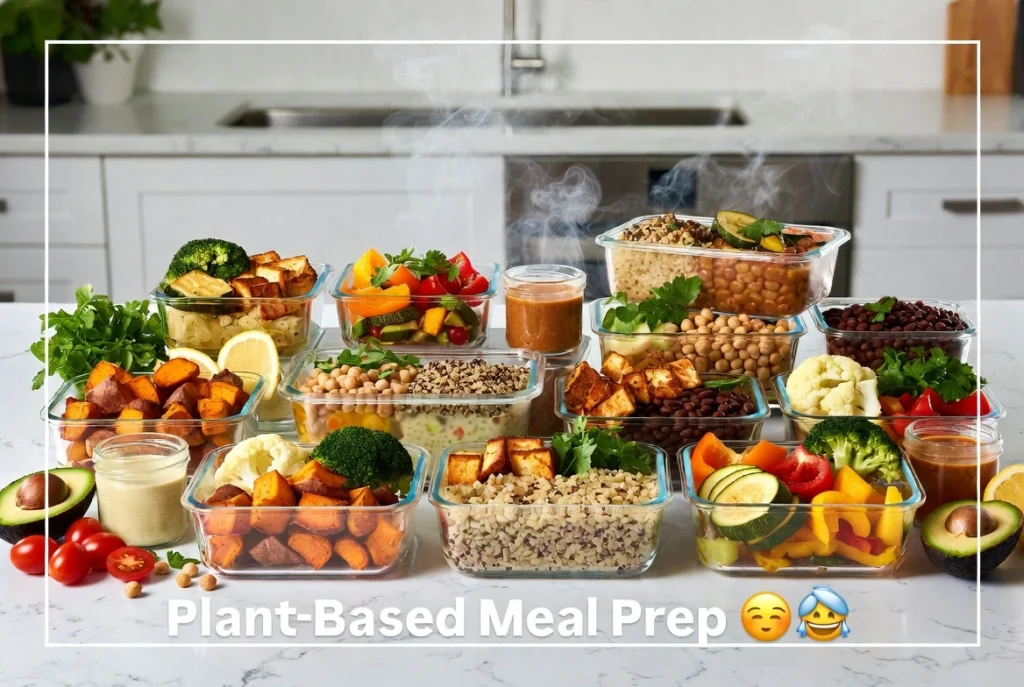
Professional plant-based meal prep is built around five core categories of ingredients. Prepping one or two items from each category every week gives you an extraordinary range of combinations that prevent boredom and make every meal feel fresh and exciting.
Category 1 — Grains: A large batch of cooked grains forms the base for bowls, stir fries, salads, and side dishes throughout the week. Cook 2–3 cups of dried grain which expands to 4–6 cups cooked — enough for 4–6 generous servings.
Best grains to prep: Brown rice, basmati rice, quinoa, farro, bulgur wheat, wild rice, and barley.
Category 2 — Legumes: A large batch of cooked legumes provides plant-based protein and fiber for curries, soups, salads, dips, and bowls throughout the week. If using canned legumes simply drain, rinse, and store. If cooking from dried, a large batch takes the same time as a small one.
Best legumes to prep: Chickpeas, black beans, lentils, kidney beans, and cannellini beans.
Category 3 — Roasted vegetables: A large tray of roasted seasonal vegetables is one of the most versatile meal prep items you can make. They work in bowls, wraps, sandwiches, pasta dishes, grain salads, and as a simple side dish with any main.
Best vegetables to roast: Sweet potato, broccoli, cauliflower, bell peppers, zucchini, red onion, eggplant, Brussels sprouts, carrots, and beets.
Category 4 — Sauces and dressings: A selection of 2–3 homemade sauces and dressings stored in jars in the fridge transforms simple prepped ingredients into exciting, flavorful meals in seconds. The sauce is what makes a bowl of grains, legumes, and roasted vegetables into something truly extraordinary.
Best sauces and dressings to prep: Tahini lemon dressing, cilantro lime sauce, peanut ginger sauce, roasted red pepper sauce, vegan pesto, simple tomato sauce, and miso ginger dressing.
Category 5 — Proteins and toppings: Prepped proteins and toppings add texture, flavor, and nutritional completeness to any meal. These are the finishing touches that elevate a simple bowl into something genuinely impressive.
Best proteins and toppings to prep: Baked tofu, marinated tempeh, crispy chickpeas, roasted seeds, homemade hummus, pickled onions, and cashew cream.
The Ultimate Weekly Plant-Based Meal Prep Routine
Here is a complete step-by-step Sunday meal prep routine that takes approximately 2.5–3 hours and sets you up for an entire week of effortless, delicious plant-based eating.
Before you start — set up your workspace. Clear your counters, gather all your containers, preheat your oven to 220°C, and put on a podcast or your favourite music. A well-organized workspace makes the entire prep session faster and more enjoyable.
Step 1 — Start the grains first (5 minutes active, 15–45 minutes hands-off)
Cook a large batch of your chosen grain for the week. Rice and quinoa take 15–20 minutes. Brown rice takes 40–45 minutes. Farro and barley take 30–40 minutes. Start these first as they require the least attention and cook hands-off while you prepare everything else.
- Rinse 2 cups of brown rice and cook in 4 cups of vegetable stock with a pinch of salt.
- Rinse 1.5 cups of quinoa and cook in 3 cups of vegetable stock.
Step 2 — Prep and roast the vegetables (15 minutes active, 25 minutes hands-off)
While the grains cook, prepare your roasted vegetables. Wash, peel, and cut everything into similar sized pieces for even cooking. Toss with olive oil and your chosen spice blend and spread on large sheet pans.
Week 1 roasted vegetable combination: Sweet potato cubes + broccoli florets + red onion wedges tossed with olive oil, smoked paprika, cumin, garlic powder, salt, and pepper. Roast at 220°C for 22–25 minutes.
Week 2 roasted vegetable combination: Cauliflower florets + cherry tomatoes + zucchini slices tossed with olive oil, Italian herbs, garlic, and lemon zest.
Week 3 roasted vegetable combination: Beets + carrots + Brussels sprouts tossed with olive oil, balsamic vinegar, thyme, and maple syrup.
Step 3 — Prepare the legumes (5 minutes active)
If using canned legumes drain two cans of chickpeas and one can of black beans. Rinse thoroughly and pat dry. Set aside one cup of chickpeas for crispy roasted chickpeas and store the rest in airtight containers.
For crispy chickpeas: Toss the dried chickpeas with olive oil, smoked paprika, cumin, salt, and pepper. Spread on a sheet pan and roast at 200°C for 25–30 minutes until deeply crispy.
Step 4 — Make the sauces (15 minutes active)
While the vegetables and chickpeas roast, make 2–3 sauces and dressings that will transform your meals throughout the week.
Tahini lemon dressing: Blend tahini, lemon juice, garlic, maple syrup, cumin, salt, and water until smooth. Store in a jar — lasts 7 days in the fridge.
Peanut ginger sauce: Blend peanut butter, soy sauce, rice vinegar, maple syrup, fresh ginger, garlic, sesame oil, and water until smooth. Extraordinary over rice bowls and noodles.
Simple tomato sauce: Sauté garlic and onion in olive oil, add canned tomatoes, Italian herbs, salt, and a pinch of sugar. Simmer for 20 minutes. Use for pasta, pizza, and grain bowls.
Step 5 — Prepare the protein (10 minutes active, 25 minutes hands-off)
Prepare a batch of baked tofu that can be used in bowls, stir fries, wraps, and salads throughout the week.
Baked tofu: Press 400g of extra-firm tofu for 15 minutes. Cut into cubes. Toss with soy sauce, sesame oil, garlic powder, smoked paprika, and cornstarch. Bake at 200°C for 25–30 minutes, flipping halfway, until golden and slightly chewy.
Step 6 — Prep the raw vegetables and garnishes (15 minutes active)
While everything bakes, prepare raw vegetables and garnishes that do not need cooking but benefit from being prepped in advance.
- Wash and dry all salad greens. Store in an airtight container lined with paper towels to absorb moisture.
- Dice one red onion and one cucumber. Store separately.
- Make a batch of pickled red onions: Thinly slice a red onion and cover with apple cider vinegar, a pinch of salt, and a teaspoon of sugar. Ready in 30 minutes and lasts 2 weeks in the fridge.
- Make a batch of homemade hummus in the blender: chickpeas, tahini, lemon juice, garlic, olive oil, salt, and water.
- Chop fresh herbs — parsley, cilantro, or chives — and store in a small container.
Step 7 — Cool everything and store
Allow all cooked items to cool to room temperature before sealing in containers. Storing hot food in sealed containers creates condensation that promotes bacterial growth and makes food soggy. Label every container with the contents and date.
Total prep time: Approximately 2.5–3 hours
Total meals covered: 5–7 days of breakfast, lunch, and dinner components
What to Make With Your Prepped Ingredients — A Full Week of Plant-Based Meals
Here is how to turn your prepped ingredients into a full week of exciting, varied, and deeply satisfying plant-based meals:
Monday:
Lunch — Brown rice bowl with roasted sweet potato, chickpeas, avocado, and tahini lemon dressing.
Dinner — Baked tofu stir fry with quinoa, sautéed greens, and peanut ginger sauce.
Tuesday:
Lunch — Hummus wrap with roasted vegetables, pickled red onions, and fresh herbs.
Dinner — Simple tomato pasta with crispy chickpeas, fresh basil, and a side salad.
Wednesday:
Lunch — Grain salad with quinoa, roasted beets, black beans, cucumber, and lemon tahini dressing.
Dinner — Tofu and roasted vegetable bowl with brown rice and miso ginger dressing.
Thursday:
Lunch — Black bean and roasted vegetable burrito bowl with cilantro lime rice, avocado, and salsa.
Dinner — Lentil soup made fresh using the prepped vegetable stock and stored lentils — 20 minutes from start to finish.
Friday:
Lunch — Roasted vegetable and hummus flatbread with pickled onions and fresh herbs.
Dinner — Tofu fried rice using leftover brown rice, frozen vegetables, soy sauce, and sesame oil — ready in 15 minutes.
Weekend:
Use any remaining prepped ingredients in creative combinations — grain salads, loaded wraps, quick stir fries, or a big batch of soup that can be frozen for the following week.
The Best Plant-Based Foods for Batch Cooking
These are the absolute best plant-based ingredients to batch cook because they store exceptionally well, are incredibly versatile, and form the foundation of dozens of different meals:
Soups and stews: Lentil soup, chickpea curry, black bean soup, tomato basil soup, and minestrone all batch cook beautifully and taste even better the next day. Make a large pot and freeze individual portions for effortless future meals.
Grains: Brown rice, quinoa, and farro all keep for 5 days in the fridge and reheat perfectly with a splash of water in the microwave or a pan.
Roasted vegetables: Keep for 4–5 days in the fridge and can be eaten cold in salads, reheated in the oven or microwave, or repurposed in wraps, bowls, and pasta dishes.
Baked tofu: Keeps for 5 days in the fridge and reheats beautifully in a skillet, air fryer, or oven.
Hummus and dips: Keep for 5–7 days in the fridge and are endlessly versatile as a spread, dip, sauce base, and bowl addition.
Sauces and dressings: Most homemade plant-based sauces keep for 5–7 days in the fridge and can completely transform simple prepped ingredients into exciting meals.
Essential Food Safety Guidelines for Meal Prep
Food safety is critically important in meal prep. Always follow these guidelines:
Cool before storing: Allow all cooked food to cool completely to room temperature before sealing in containers. Never put hot food directly into sealed containers.
Label everything: Always label containers with the contents and date prepared. This prevents confusion and ensures food is used within its safe storage window.
Storage times: Cooked grains and legumes keep for 5 days. Roasted vegetables keep for 4–5 days. Baked tofu keeps for 5 days. Soups and stews keep for 5 days and freeze for up to 3 months. Fresh salad greens keep for 3–4 days. Homemade sauces and dressings keep for 5–7 days.
Freeze what you will not use: If you have prepped more than you can realistically eat in 5 days, freeze the excess immediately rather than letting it sit in the fridge until it goes bad. Soups, stews, curries, cooked grains, and baked tofu all freeze excellently.
Reheat thoroughly: Always reheat prepped food until it is piping hot all the way through — never just warm. This is particularly important for legumes and tofu.
Meal Prep Tips from Professional Plant-Based Cooks
These are the tips that separate casual meal preppers from truly professional ones:
Prep what you will actually eat. The most beautifully prepped refrigerator in the world means nothing if it is full of foods you do not actually enjoy eating. Prep the ingredients and dishes that you genuinely love and that fit naturally into your real weekly eating patterns.
Keep it simple. You do not need to prep 15 different items every week. Even prepping just three things — a batch of grains, a batch of roasted vegetables, and a sauce — can dramatically transform the speed and ease of your weekday cooking.
Use your freezer as a second refrigerator. The freezer is one of the most underutilized tools in home cooking. Batch-cooked soups, stews, curries, and sauces freeze for 3 months and provide instant high-quality meals on the nights when cooking anything at all feels impossible.
Invest in quality containers. Cheap containers leak, crack, do not seal properly, and absorb odors. High quality glass containers with airtight lids are a genuine investment in the success of your meal prep practice.
Make double batches whenever you cook. You do not need a dedicated weekly prep session to meal prep effectively. Simply doubling every recipe you cook throughout the week — making twice as much curry, twice as much rice, twice as many roasted vegetables — naturally builds a reserve of prepped ingredients with zero additional effort.
Prep your snacks too. Washed and cut fruit and vegetables stored at eye level in your fridge, portioned nuts and seeds in small containers, and homemade hummus and dips ready to go make healthy snacking automatic and effortless.
Final Thoughts
Meal prepping on a plant-based diet is one of the most transformative habits you can build for your health, your time, your budget, and the sustainability of your plant-based lifestyle long-term. It turns the challenge of healthy eating from a daily struggle into a once-weekly investment that pays extraordinary dividends every single day of the week.
At The Green Kitchen every recipe we create is designed with real life in mind — delicious, nourishing, and practical enough to fit into a busy schedule. Browse our full collection of plant-based recipes for endless inspiration for your next meal prep session and discover just how effortless and exciting plant-based eating can truly be. 🌿
Do you already meal prep on a plant-based diet? Leave a comment below with your favourite meal prep tips and recipes — we love hearing from The Green Kitchen community!
Looking for a quick and easy meal prep dinner? Our Easy Vegan Chickpea Curry is simple, flavorful, and ready in just 30 minutes

Sonia is a passionate plant-based cook and the lead recipe creator at The Green Kitchen. With years of experience crafting vibrant, wholesome vegan meals, she believes that healthy eating should be exciting, flavorful, and accessible to everyone. Her recipes are tested, practical, and designed to bring joy to your kitchen every single day.