Every parent wants the best possible start in life for their child — and one of the most powerful gifts you can give a growing brain is the right nutrition. The foods children eat in their earliest years have a profound and lasting impact on their cognitive development, their ability to learn and concentrate, their emotional regulation, and their long-term brain health. And the extraordinary news is that a well-planned whole food plant-based diet delivers some of the most powerful brain-supporting nutrients available anywhere in the food world.
There is a persistent myth that children need meat and dairy to develop healthy brains. The science tells a very different story. Some of the most brain-supportive nutrients on the planet — omega-3 fatty acids, iron, zinc, folate, Vitamin E, antioxidants, and complex carbohydrates — are found in extraordinary abundance in plant foods. When parents understand which specific plant-based foods support children’s brain development and how to incorporate them into everyday meals, raising a thriving, bright, plant-powered child becomes not just possible but genuinely exciting.
In this complete guide we are going to explore the top vegan foods that support children’s brain development, the specific nutrients that matter most for growing brains, and practical tips for getting these foods into your child’s diet every single day. Whether you are raising a vegan child from birth, transitioning your family to plant-based eating, or simply looking to add more brain-supporting foods to your child’s diet — this guide has everything you need.
Why Nutrition Matters So Much for Children’s Brain Development
The human brain develops more rapidly in the first five years of life than at any other time. During this extraordinary period of growth the brain is forming billions of neural connections, building the myelin sheaths that insulate nerve fibers and allow fast, efficient communication between brain cells, developing the prefrontal cortex responsible for decision-making and emotional regulation, and laying the neurological foundation for everything from language acquisition to mathematical thinking.
All of this extraordinary growth requires a constant, consistent supply of specific nutrients. When these nutrients are present in adequate amounts the brain develops optimally — children learn more easily, concentrate more effectively, regulate their emotions more successfully, and lay the foundation for lifelong cognitive health. When these nutrients are deficient the consequences can be significant and in some cases long-lasting.
The most critical nutrients for children’s brain development are DHA omega-3 fatty acids, iron, zinc, iodine, Vitamin B12, choline, folate, Vitamin D, Vitamin E, and complex carbohydrates. A well-planned whole food plant-based diet can deliver all of these nutrients in the amounts children need — with particular attention to a small number of nutrients that require supplementation or careful food selection on a vegan diet.
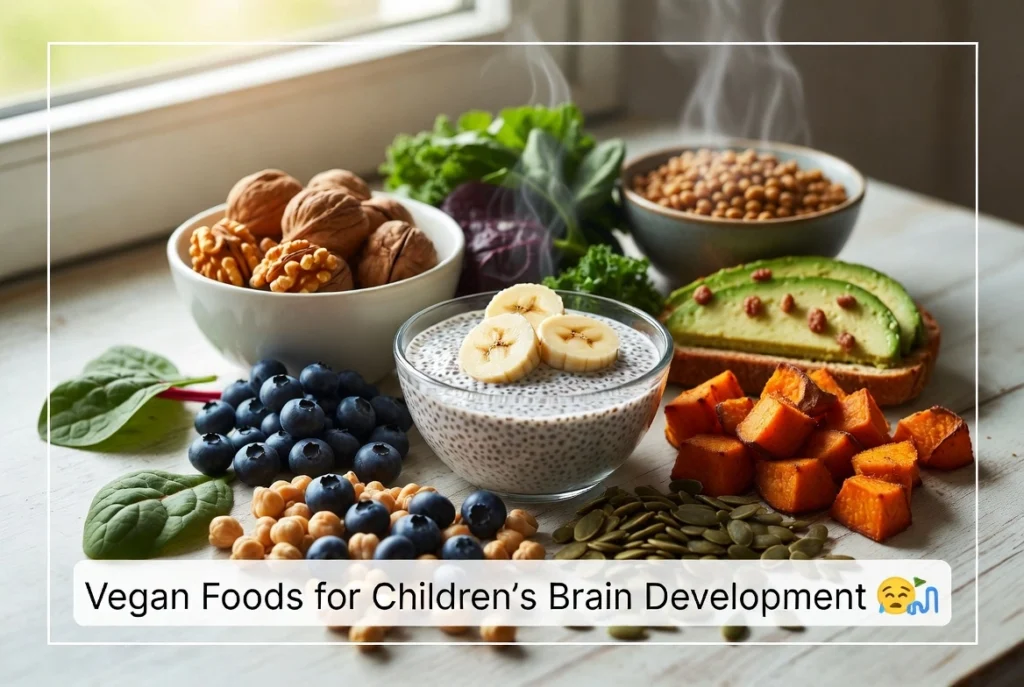
1. Walnuts — The Brain-Shaped Brain Food
It is no coincidence that walnuts look remarkably like a tiny human brain. They are one of the most brain-supportive foods available anywhere and are an absolute essential in a child’s plant-based diet.
Walnuts are the only nut that is a significant source of ALA omega-3 fatty acids — the plant-based precursor to DHA and EPA, the long-chain omega-3 fats that make up approximately 60% of the brain’s structure. DHA is particularly critical for the development of the brain’s gray matter, the formation of neural connections, and the myelination of nerve fibers that allows fast, efficient brain communication.
Walnuts are also rich in Vitamin E, polyphenol antioxidants, magnesium, and folate — all of which support healthy brain development and protect developing neural tissue from oxidative damage.
How to serve walnuts to children: Finely chop and sprinkle over oatmeal or yogurt. Blend into smoothies. Mix into homemade energy balls with oats, dates, and nut butter. Add to banana bread or muffin recipes. Make walnut pesto with fresh basil and serve over pasta.
2. Blueberries — The Memory Berry
Blueberries have been more extensively studied for their brain health benefits than almost any other food on the planet — and the results are consistently extraordinary. They are one of the richest sources of anthocyanins available anywhere — powerful antioxidants that cross the blood-brain barrier and directly protect brain cells from oxidative damage and inflammation.
Research has shown that regular blueberry consumption improves memory, enhances learning capacity, supports healthy communication between brain cells, and protects against the cognitive decline that can result from oxidative stress. For growing children whose brains are forming new neural connections at an extraordinary rate, the antioxidant protection that blueberries provide is genuinely invaluable.
How to serve blueberries to children: Add fresh or frozen blueberries to breakfast oats, smoothies, or pancakes. Serve as a simple snack with a small handful of walnuts. Blend into homemade blueberry muffins or energy balls. Mix into vegan yogurt with maple syrup and granola for a breakfast children absolutely love.
3. Chia Seeds — The Tiny Omega-3 Powerhouse
Chia seeds are one of the most nutrient-dense foods available anywhere — and they are particularly valuable in children’s plant-based diets for their extraordinary omega-3 fatty acid content. Just two tablespoons of chia seeds provide approximately 5 grams of ALA omega-3 fatty acids — more than the daily recommended intake for most children.
Beyond omega-3s, chia seeds are an excellent source of calcium for bone development, iron for cognitive function and oxygen delivery to the brain, magnesium for nervous system function, and zinc for immune health and brain development. Their mild, neutral flavor and ability to absorb liquid and form a gel makes them one of the most versatile and easiest brain-supporting foods to incorporate into a child’s daily diet.
How to serve chia seeds to children: Make overnight chia pudding with plant milk, maple syrup, and vanilla — a breakfast children love. Add to smoothies, oatmeal, or yogurt. Mix into pancake batter or muffin recipes. Make a simple chia jam by combining chia seeds with mashed fruit and a drizzle of maple syrup.
4. Lentils — The Iron-Rich Brain Builder
Iron is one of the most critical nutrients for children’s brain development and cognitive function. It is essential for the production of hemoglobin that carries oxygen to the brain, the synthesis of neurotransmitters including dopamine and serotonin, and the myelination of nerve fibers that allows efficient brain communication. Iron deficiency in early childhood is one of the most common and most preventable causes of cognitive impairment and learning difficulties worldwide.
Lentils are one of the richest plant sources of iron available anywhere — one cup of cooked lentils provides approximately 6.6mg of iron, which represents a substantial portion of a child’s daily iron requirement. They are also loaded with protein for brain cell construction, folate for neural development, zinc for cognitive function, and complex carbohydrates that provide the steady, sustained glucose supply that developing brains depend on.
How to serve lentils to children: Make a simple, mildly spiced red lentil soup that children love. Add lentils to pasta sauce for a hearty bolognese-style dinner. Make lentil patties or lentil balls as a fun finger food. Cook lentils into dal with coconut milk and mild spices. Always serve lentil dishes with a Vitamin C-rich food — tomatoes, bell peppers, or a squeeze of lemon — to maximize iron absorption.
5. Sweet Potato — The Brain Energy Champion
The brain is the most glucose-dependent organ in the entire human body — it uses approximately 20% of the body’s total energy supply despite representing only 2% of body weight. For growing children with rapidly developing brains, a consistent, steady supply of high quality glucose from complex carbohydrates is absolutely essential for optimal cognitive function, concentration, and learning.
Sweet potato is one of the best possible sources of brain-supporting complex carbohydrates available in the plant kingdom. It provides slow-releasing glucose that fuels the brain steadily throughout the day without the energy spikes and crashes associated with refined sugar and processed carbohydrates. Sweet potato is also extraordinarily rich in beta-carotene that converts to Vitamin A in the body — essential for healthy brain development, nerve cell function, and the protection of brain tissue from oxidative damage.
How to serve sweet potato to children: Bake whole sweet potatoes and serve with vegan butter and a sprinkle of cinnamon — a simple, popular children’s meal. Make sweet potato fries baked in the oven with a touch of olive oil. Add to smoothies for natural sweetness and nutritional density. Mash with coconut milk and maple syrup for a delicious side dish. Use as a pizza base or in sweet potato pancakes.
6. Avocado — The Healthy Fat Brain Builder
The brain is made of approximately 60% fat — and the quality of the fat children eat has a direct impact on the quality of the brain tissue they build. Avocado is one of the richest sources of brain-healthy monounsaturated fats available in any whole food — fats that support the structural integrity of brain cell membranes, improve blood flow to the brain, and support the absorption of the fat-soluble vitamins A, D, E, and K that are critical for neurological development.
Avocados are also an excellent source of folate for neural tube development and cognitive function, Vitamin K for brain cell protection, Vitamin B6 for neurotransmitter production, and Vitamin C for antioxidant protection of brain tissue. They are one of the most complete brain-supporting whole foods available anywhere.
How to serve avocado to children: Mash on whole grain toast with a squeeze of lemon — a classic that children love. Add to smoothies for creaminess without affecting flavor significantly. Make simple guacamole with lime, salt, and mild tomato. Slice and serve alongside any meal as a simple, nutritious addition. Add to wraps, sandwiches, and grain bowls.
7. Pumpkin Seeds — The Zinc and Iron Brain Mineral
Zinc and iron are two of the most important minerals for children’s brain development — and pumpkin seeds are one of the richest plant sources of both. Zinc plays a critical role in the formation of new neural connections, the regulation of neurotransmitter function, and the development of the hippocampus — the brain region most directly responsible for learning and memory. Iron, as discussed above, is essential for oxygen delivery to the brain and neurotransmitter synthesis.
Pumpkin seeds are also rich in magnesium for nervous system function, tryptophan for serotonin production, and antioxidants that protect developing brain tissue. They are a convenient, versatile, and genuinely delicious brain-supporting snack that most children enjoy.
How to serve pumpkin seeds to children: Sprinkle over oatmeal, yogurt, or salads. Toast lightly in a dry pan and serve as a snack. Blend into homemade pumpkin seed butter as an alternative to peanut butter. Add to homemade granola, trail mix, or energy balls. Sprinkle over soups, pasta, or grain bowls.
8. Fortified Plant Milks — The B12 and Calcium Essential
Vitamin B12 is arguably the single most important nutrient to monitor in children following a plant-based diet. B12 is absolutely essential for the development and maintenance of the myelin sheaths that insulate nerve fibers and allow fast, efficient brain communication. A B12 deficiency in childhood can cause serious and potentially irreversible neurological damage — making consistent, reliable B12 intake a genuine non-negotiable for vegan children.
Fortified plant milks — oat, soy, and almond milks — are among the most convenient and reliable sources of B12 for children on a plant-based diet. They also provide fortified calcium and Vitamin D that support healthy bone development alongside brain health. Most pediatric and dietetic organizations recommend that vegan children also take a Vitamin B12 supplement in addition to consuming fortified foods.
How to serve fortified plant milks to children: Use as the base for breakfast oatmeal, smoothies, and chia puddings. Serve as a drink alongside meals. Use in baking, pancakes, and sauces. Choose fortified oat milk or fortified soy milk as the most nutritionally complete options.
9. Chickpeas — The Complete Brain Nutrition Package
Chickpeas are one of the most complete and versatile brain-supporting foods in the entire plant kingdom — providing protein, iron, zinc, folate, complex carbohydrates, and choline all in a single, affordable, widely available ingredient.
Choline deserves particular attention here. Choline is an essential nutrient that is critical for brain development — it is a precursor to acetylcholine, one of the brain’s most important neurotransmitters, and plays a critical role in the development of the hippocampus and the formation of neural connections that underpin learning and memory. Chickpeas are one of the best plant-based sources of choline available.
How to serve chickpeas to children: Roast with mild spices for a crunchy, addictive snack. Make homemade hummus — most children love it with vegetable sticks or pita bread. Add to mild curries, soups, and stews. Make chickpea pasta for a protein-rich dinner. Blend into chocolate hummus with cocoa and maple syrup for a secretly nutritious dessert dip.
10. Dark Leafy Greens — The Folate and Iron Foundation
Dark leafy greens — spinach, kale, Swiss chard, and broccoli — are among the most nutrient-dense foods on the planet and are absolutely essential in a brain-supporting plant-based diet for children. They are extraordinary sources of folate — the B vitamin that is critical for neural tube development in early pregnancy and continues to play a vital role in brain cell production and cognitive function throughout childhood.
Spinach alone provides iron, folate, Vitamin K, Vitamin A, Vitamin C, calcium, and magnesium — an extraordinary nutritional package that supports virtually every aspect of healthy brain development. Broccoli is particularly rich in sulforaphane — a powerful anti-inflammatory compound that has been shown in research to support brain health and protect neural tissue.
How to serve leafy greens to children: Blend spinach into fruit smoothies — the color turns green but the flavor is completely masked by banana and mango. Add finely chopped spinach to pasta sauces, soups, and curries. Make green pancakes with blended spinach — children love the fun color. Roast broccoli until crispy at high heat — most children who refuse steamed broccoli enjoy it roasted. Add kale to homemade chips baked with olive oil and a pinch of salt.
The Most Important Nutrients for Vegan Children’s Brain Development — A Summary
Here is a quick reference guide to the most critical brain-supporting nutrients for vegan children and their best plant-based sources:
DHA and EPA omega-3 fatty acids: Algae-based DHA supplement (essential), walnuts, chia seeds, flaxseeds, hemp seeds.
Iron: Lentils, chickpeas, tofu, pumpkin seeds, fortified cereals, dark leafy greens. Always pair with Vitamin C for maximum absorption.
Zinc: Pumpkin seeds, hemp seeds, lentils, chickpeas, tofu, cashews, oats.
Vitamin B12: Fortified plant milks, fortified nutritional yeast, fortified cereals, B12 supplement (essential).
Folate: Lentils, chickpeas, edamame, spinach, broccoli, asparagus, avocado.
Choline: Chickpeas, lentils, tofu, quinoa, broccoli, peanut butter.
Iodine: Iodized salt, nori seaweed, iodine supplement (recommended for vegan children).
Vitamin D: Fortified plant milks, sunlight exposure, Vitamin D supplement (recommended especially in low-sunlight regions).
Calcium: Fortified plant milks, tofu set with calcium sulfate, broccoli, kale, almonds, white beans.
Supplementation Recommendations for Vegan Children
While a well-planned whole food plant-based diet delivers extraordinary nutrition for growing children, pediatric and dietetic organizations consistently recommend the following supplements for vegan children:
Vitamin B12: A daily supplement is essential. B12 is the one nutrient that cannot be reliably obtained from plant foods and is critical for neurological development. Consult your pediatrician for age-appropriate dosing.
Algae-based DHA: Since children’s bodies convert ALA from plant foods to DHA inefficiently, a direct algae-based DHA supplement ensures optimal brain development. This is the same DHA found in fish oil — derived directly from the algae that fish eat — without any of the mercury or environmental concerns.
Vitamin D: Essential for children in low-sunlight regions or those with limited outdoor sun exposure. Vitamin D is critical for brain development, immune function, and calcium absorption.
Iodine: Iodine is critical for brain development and thyroid function. Vegan children who do not consume iodized salt or seaweed regularly should supplement with iodine. Consult your pediatrician for appropriate dosing.
Always consult a registered dietitian or pediatrician before starting any supplement regimen for a child.
A Sample Day of Brain-Supporting Plant-Based Eating for Children
Here is an example of what a full day of brain-supporting vegan eating looks like for a school-age child:
Breakfast: Banana oat pancakes made with fortified oat milk, topped with blueberries, a drizzle of maple syrup, and a sprinkle of chia seeds.
Morning snack: A small handful of walnuts and a piece of fresh fruit.
Lunch: Lentil soup with whole grain bread and a side of carrot sticks and hummus. A glass of fortified oat milk.
Afternoon snack: Apple slices with almond butter, or roasted chickpeas with mild spices.
Dinner: Sweet potato and chickpea mild curry over brown rice with wilted spinach stirred through. A side of steamed broccoli. Avocado sliced on the side.
Dessert: Chia pudding made with fortified oat milk and topped with fresh berries.
This single day delivers outstanding amounts of DHA precursors, iron, zinc, folate, B12 from fortified foods, choline, complex carbohydrates, and antioxidants — everything a growing brain needs to develop and function at its very best.
Final Thoughts
Raising a thriving, bright, healthy child on a plant-based diet is not just possible — it is genuinely exciting. The plant kingdom offers an extraordinary array of brain-supporting nutrients in some of the most delicious, colorful, and creative foods available anywhere. With the right knowledge, the right food choices, and appropriate supplementation, vegan children can develop exceptional brain health and cognitive function that serves them for a lifetime.
At The Green Kitchen we are passionate about making plant-based cooking delicious, accessible, and nourishing for the whole family — from the youngest members to the oldest. Browse our full collection of family-friendly plant-based recipes and discover just how extraordinary — and how much fun — feeding your family plants can truly be. 🌿
Are you raising a plant-based child? Leave a comment below and share your experience — we love hearing from The Green Kitchen community!
Understanding essential food elements is key to supporting your child’s brain — read our guide on Importance of Food Elements for a complete nutritional breakdown

Sonia is a passionate plant-based cook and the lead recipe creator at The Green Kitchen. With years of experience crafting vibrant, wholesome vegan meals, she believes that healthy eating should be exciting, flavorful, and accessible to everyone. Her recipes are tested, practical, and designed to bring joy to your kitchen every single day.