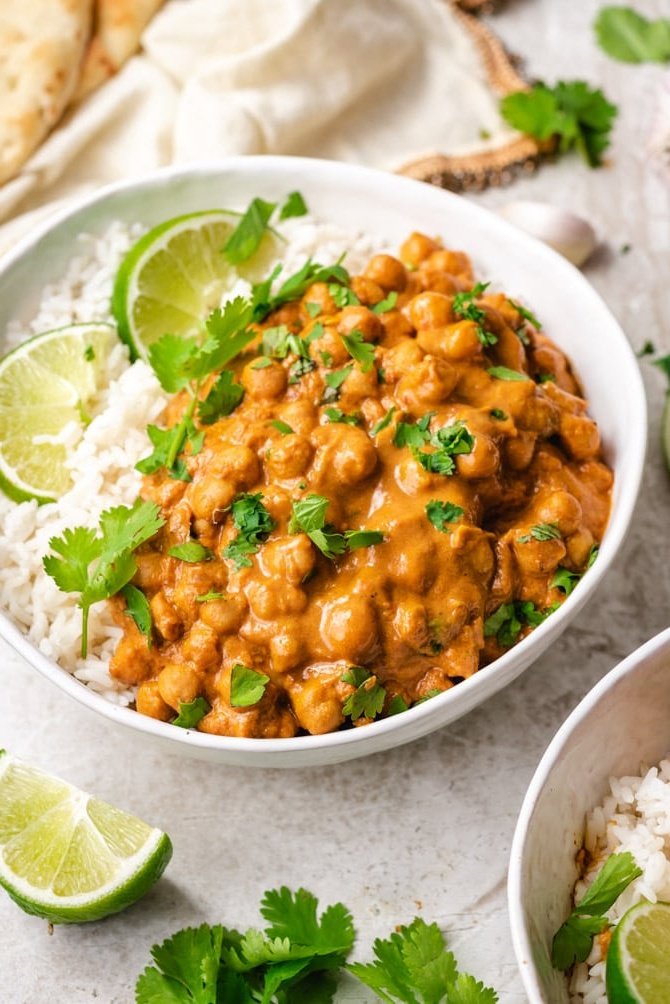
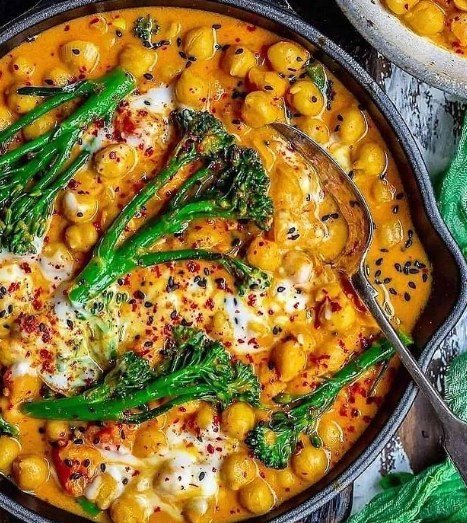
If there is one vegan dinner recipe that deserves a permanent spot in every home cook’s weekly rotation, it is this Coconut Chickpea Curry. Rich, silky, deeply spiced, and swimming in the most luscious coconut milk sauce you have ever tasted — this is the kind of curry that makes you close your eyes with the very first spoonful and wonder how something so simple can taste so extraordinarily good.
This curry brings together tender, protein-packed chickpeas and a velvety coconut milk sauce infused with garlic, ginger, and a perfectly balanced spice blend of cumin, coriander, turmeric, and garam masala. The result is a dish that is warm and comforting, bold and aromatic, and so deeply satisfying that it fills you up completely without ever feeling heavy or overly rich.
What makes this recipe truly special is its simplicity. With just one pot, a handful of pantry staples, and 35 minutes of your time, you can put a restaurant-quality vegan curry on the table that tastes like it has been slow-cooked for hours. It is 100% vegan, naturally gluten-free, budget-friendly, and absolutely perfect for weeknight dinners, Sunday meal prep, and everything in between. Serve it over fluffy basmati rice with warm naan bread and prepare to receive the most enthusiastic compliments of your cooking life.
Recipe Information
| Prep Time | Cook Time | Total Time | Servings | Calories |
|---|---|---|---|---|
| 10 mins | 25 mins | 35 mins | 4 | ~360 kcal |
Ingredients
For the Curry
- 2 cans (400g / 14 oz each) chickpeas, drained and rinsed
- 2 cans (800ml total) full-fat coconut milk
- 1 can (400g / 14 oz) chopped tomatoes
- 1 large onion, finely diced
- 5 cloves garlic, minced
- 1 tbsp fresh ginger, grated
- 2 tbsp coconut oil or olive oil
- 2 tsp cumin seeds or ground cumin
- 2 tsp ground coriander
- 2 tsp garam masala
- 1 tsp turmeric
- 1 tsp smoked paprika
- 1 tsp chili powder (adjust to taste)
- ½ tsp cinnamon
- 1 tsp salt (or to taste)
- ¼ tsp black pepper
- 1 tbsp tomato paste
- 1 tbsp maple syrup or agave
- Juice of 1 lime
- 200ml (¾ cup) vegetable stock
Optional Add-ins
- 4 large handfuls of fresh spinach or kale (stir in at the end)
- 1 large sweet potato, diced (add with chickpeas)
- 1 cup frozen peas (stir in last 5 minutes)
- 1 red bell pepper, diced (add with onions)
To Garnish
- Fresh cilantro, chopped
- A swirl of coconut cream
- Toasted coconut flakes
- Sliced red chili
- Lime wedges
- Toasted cashews (optional)
To Serve
- Steamed basmati rice or brown rice
- Warm naan or flatbread
- Vegan raita (coconut yogurt, cucumber, mint, lime)
- Mango chutney
- Poppadoms
Instructions
- Heat coconut oil in a large heavy-bottomed pot or Dutch oven over medium heat. If using cumin seeds, add them now and let them sizzle in the oil for 30–45 seconds until they pop and become fragrant. This technique — called tempering — releases the essential oils in the cumin and builds incredible flavor right from the start.
- Add the finely diced onion and cook for 7–8 minutes, stirring occasionally, until deeply golden and beginning to caramelize. This step is the flavor foundation of the entire curry — do not rush it.
- Add the minced garlic and grated ginger. Cook for 2 minutes, stirring constantly, until wonderfully fragrant and the raw smell disappears completely.
- Add the tomato paste and stir for 1 minute until it darkens slightly. Add ground cumin (if not using seeds), ground coriander, garam masala, turmeric, smoked paprika, chili powder, and cinnamon. Stir well and cook the spice blend for 1–2 minutes until deeply aromatic. This toasting step transforms the spices from flat and powdery into something rich, complex, and extraordinary.
- Pour in the chopped tomatoes and stir everything together. Cook for 3–4 minutes until the tomato mixture darkens in color and thickens slightly, cooking off the raw tomato taste.
- Add the drained chickpeas and vegetable stock. Stir to combine and simmer for 5 minutes to allow the chickpeas to begin absorbing the flavors of the sauce.
- Pour in both cans of coconut milk and stir until fully incorporated. Add maple syrup, salt, and pepper. Reduce the heat to medium-low and simmer uncovered for 15–18 minutes, stirring occasionally, until the curry has thickened into a rich, creamy, deeply golden sauce that coats the chickpeas beautifully.
- Squeeze in the lime juice. Taste and adjust seasoning — add more salt for depth, more chili for heat, more maple syrup to balance acidity, or more lime for brightness. The curry should be bold, creamy, and perfectly balanced.
- If adding spinach or kale, stir it in now and cook for 2–3 minutes until fully wilted. For frozen peas, stir in and heat through for 3 minutes.
- Ladle over steamed basmati rice in deep bowls. Garnish with fresh cilantro, a swirl of coconut cream, toasted coconut flakes, sliced chili, and a wedge of lime. Serve with warm naan, mango chutney, and vegan raita.
Pro Tips for the Best Coconut Chickpea Curry
- Use two cans of coconut milk. One can produces a thinner, lighter sauce. Two cans creates that incredibly thick, rich, restaurant-quality coconut curry that coats every chickpea in a luscious, silky sauce. For this recipe, two cans is the magic number.
- Caramelize the onions properly. Deeply golden onions dissolve into the sauce and create a sweet, savory richness that is the foundation of every great curry. Take the full 7–8 minutes and resist the urge to turn up the heat.
- Toast the spices in oil. Cooking the spice blend in oil before adding liquid is the single most important technique in curry making. It releases fat-soluble flavor compounds that you simply cannot extract by adding spices to liquid.
- Add tomato paste before the tomatoes. Cooking the tomato paste in the oil for 60 seconds before adding the chopped tomatoes concentrates and caramelizes it, adding a deeper, richer tomato flavor to the finished curry.
- Simmer gently after adding coconut milk. A rolling boil causes the coconut milk to separate and become grainy. Always reduce to a gentle simmer once the coconut milk is added.
- Finish with lime juice. Fresh lime juice added right before serving brightens all the deep, rich flavors and lifts the entire curry. It is the finishing touch that makes this recipe taste truly restaurant-quality.
Flavor Variations
- Thai Coconut Chickpea Curry: Replace the Indian spice blend with 2–3 tablespoons of red or green Thai curry paste and add a stalk of lemongrass and a few kaffir lime leaves for a fragrant, Thai-inspired coconut curry.
- Coconut Chickpea and Sweet Potato Curry: Add 2 cups of diced sweet potato along with the chickpeas. The natural sweetness of the sweet potato pairs beautifully with the coconut milk and creates an even heartier, more filling curry.
- Coconut Chickpea Dhal: Add 1 cup of red lentils along with the chickpeas and an extra 300ml of vegetable stock. The lentils break down during cooking and create an incredibly thick, hearty, protein-packed dhal-curry hybrid.
- Creamy Cashew Coconut Curry: Blend ½ cup of soaked cashews with some of the curry sauce and stir back in for an even richer, silkier, more indulgent coconut sauce that is absolutely extraordinary.
Nutritional Highlights (Per Serving)
| Calories | Protein | Carbs | Fiber | Iron |
|---|---|---|---|---|
| ~360 kcal | 14g | 44g | 12g | 30% DV |
Chickpeas are among the most impressive plant-based protein sources available — packed with all essential amino acids, complex carbohydrates, and extraordinary amounts of soluble fiber that supports gut health, lowers cholesterol, and stabilizes blood sugar. Coconut milk provides medium-chain triglycerides that the body processes more efficiently than other saturated fats. The spice blend — turmeric, ginger, cumin, and garam masala — contains some of the most potent anti-inflammatory compounds found in any food, making this curry not just delicious but genuinely one of the most nourishing meals you can make.
Storage and Reheating
- Refrigerator: Store in an airtight container for up to 5 days. The flavor deepens and improves significantly the next day as the spices continue to develop. This is genuinely one of the best leftover meals in plant-based cooking.
- Reheat: Reheat in a saucepan over medium heat, stirring frequently. Add a splash of coconut milk, water, or vegetable stock if the curry has thickened too much during storage. Can also be reheated in the microwave in 2-minute intervals, stirring between each.
- Freezer: This curry freezes beautifully for up to 3 months. Freeze in individual portions for the easiest possible weeknight dinners. Thaw overnight in the fridge and reheat gently on the stove with a splash of coconut milk.
- Meal prep: Make a large batch on Sunday and enjoy restaurant-quality vegan curry all week long. It is one of the most satisfying and practical meal prep recipes in plant-based cooking.
Frequently Asked Questions
Can I use light coconut milk instead of full-fat?
You can, but the sauce will be significantly thinner and less rich. Full-fat coconut milk is what gives this curry its signature silky, creamy, restaurant-quality consistency. If calories are a concern, use one can of full-fat and one can of light coconut milk for a good balance of richness and lightness.
Can I use dried chickpeas instead of canned?
Yes. Soak 250g of dried chickpeas overnight in plenty of cold water. Drain and cook in fresh water for 45–60 minutes until completely tender. Dried and cooked chickpeas have a slightly firmer texture than canned and produce excellent results in this curry.
My curry sauce split and looks grainy — what happened?
Splitting occurs when coconut milk is boiled too aggressively. If your sauce has split, reduce the heat immediately to the lowest setting and stir in 2–3 tablespoons of fresh coconut milk. Stir gently and the sauce should come back together. Prevention is the best solution — always keep coconut milk curries at a gentle simmer rather than a boil.
How do I make this curry less spicy?
Reduce or omit the chili powder and use sweet paprika instead of smoked paprika. Make sure your garam masala blend is a mild variety. Serving with a generous dollop of vegan coconut yogurt on top also cools down the heat significantly.
Can I make this in a slow cooker?
Yes. Sauté the onion, garlic, ginger, and spices in a pan first, then transfer everything to the slow cooker. Add all remaining ingredients. Cook on low for 6–8 hours or high for 3–4 hours. Stir in spinach or other greens in the last 30 minutes.
What is the best way to serve coconut chickpea curry for a dinner party?
Serve in a large, beautiful bowl in the center of the table with steamed basmati rice, warm naan bread, mango chutney, vegan raita, poppadoms, and a selection of garnishes for guests to help themselves. This curry is stunning for entertaining — it looks impressive, feeds a crowd, and tastes like it took all day to make.
Tried this recipe? Leave a comment below and let us know how it turned out! Tag us on Instagram and Facebook — we love seeing your plant-powered creations. Looking for more vegan dinner ideas? Browse all recipes on The Green Kitchen — new recipes posted every single day!